


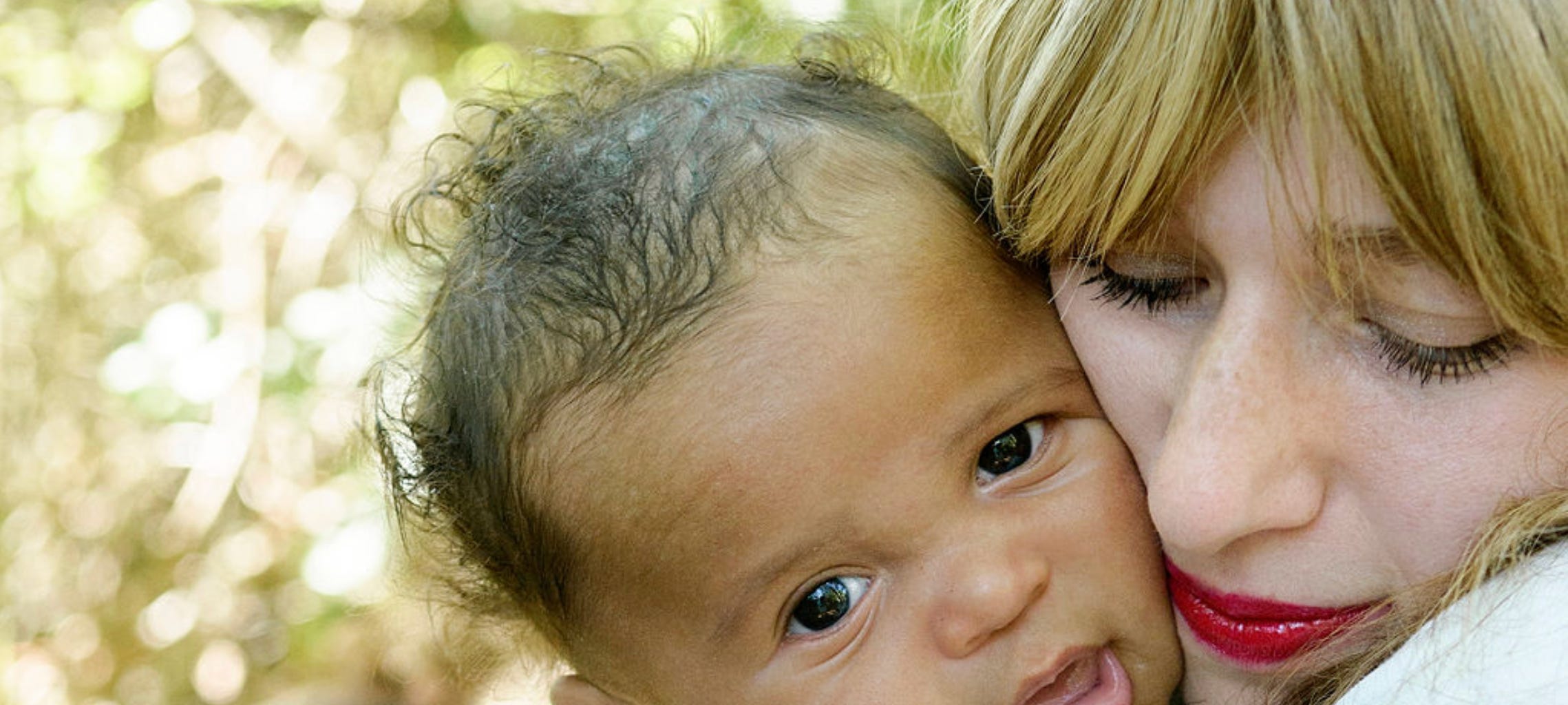
Important intro here from present day Chavie :)).
I wrote this piece six years ago, at the beginning of COVID, when the Black Lives Matter conversation was exploding across the country. At the time, I felt like I had a very specific perspective to share: I am white, and my son is Black. I used the phrase “white woman of privilege” then, and I’m not sure I would use that exact language today, especially as a Jew. But this essay was a real-time peek into my experience trying to understand, learn, and navigate life as the mother of a Black son.
Six years later, thank G-d, Menny is thriving, but the questions around identity are as relevant as ever. If anything, as he gets older, they become more significant. Menny is figuring out where he belongs as a Black Jewish boy growing up in Montana, and there are no easy answers. My job, as his mother, is to be his safe place, to love him unconditionally, and to remind him again and again that he is good, loved, and exactly who he is meant to be.
How do I even begin…? To speak or not to speak? These are the thoughts that have been going through my head since Saturday night, at the end of the Jewish holiday of Shavuot.
There are a few things that I feel very deeply and strongly about. They may not all resonate with you, and that’s ok! I feel like we can discuss them, dig deep, learn from each other, and do it with grace.
Let’s do it with grace.
Let me preface my thoughts by saying I am not an expert on racism or the experience of being Black; there are many better resources out there for that… I am just sharing my process and beliefs, in the hope that it provokes a healthy conversation, fosters a desire to be open to learning new things, and inspires confidence in each of us that we can do hard things and lean into uncomfortable thoughts and feelings.
Ok, intro is over. Let’s get down to business:
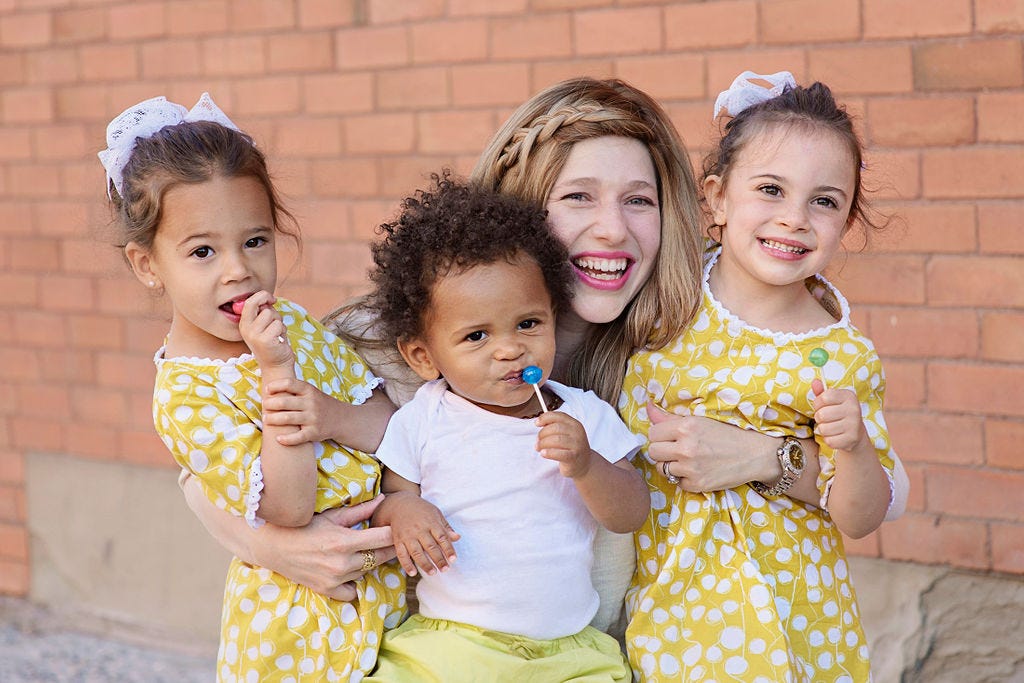
I am a white woman; I have no idea what it’s like to be Black. I grew up with white privilege and continue to benefit from white privilege, and I have a Black son. A Black son who is being raised as a religious Jew in rural America. (We are fortunate to live in a very loving community, but there is extraordinarily little diversity in Bozeman, Montana.) One of the thoughts I’ve been wrestling with is, “Maybe the ultimate sign of white privilege is the fact that I have adopted a Black son”… Be that as it may, it’s up to me and my husband to have the tough conversations with Menny about life and the color of his skin. For example, without knowing what it feels like personally, to chat with him about how he should behave if he is ever pulled over by a police officer for speeding.
My son is only seven, but he’s already picking up on some inherent racial divide in our society. A few months ago at dinner, he asked me, and I quote, “Are there still people in this world that don’t like Black people?” and I sadly had to say, “Yes, it’s true…” (and of course, that led to a more in-depth conversation). A few years ago, he expressed to me that he wishes he could be white. (The majority of the people he knows and loves are white.) When we landed in Florida a few months ago (remember when we could still travel 🙂), Menny stood there in amazement and said, “Wow! There are so many Black people here!” We asked him how that made him feel. He said, “So good!” And it hit me: he doesn’t always feel like he belongs, even if it doesn’t affect his day-to-day life, as he enjoys a happy and well-adjusted life. He is still aware that he looks different and senses a kinship when he sees other Black people. Hence his favorite singer being Nissim Black 😉. I guess my point is that I feel uniquely positioned as a white person raising a Black son to have a distinctive perspective. Yet, at the same time, it doesn’t let me off the hook! I still have so much to learn and to understand, and probably some biases that I need to confront. I owe it to my son and my family to do so!
I have been taking the time to listen to Black women and men. The common theme I’m hearing is noticeably clear: it is counterproductive to have an outrage contest, to see who can use various platforms to express all the right things and be indignant on behalf of the Black community. The real hope expressed by Black Americans is that we change how we do things in our day-to-day life. What relationships are we going to have with our neighbors who are Black? Are we going to speak up when something racist is said in our presence? How are we going to educate the next generation of American kids? In my opinion, this is even more important than reading the books and listening to podcasts (and yes, that’s important too), as it’s pretty easy to read and listen and not convert those ideas into action. So, in your own home, in your own corner of the world, you can make a difference and have a ripple effect with the words you choose to say and the company you choose to keep!
As a Jew, I know how it feels to be persecuted and hated for something we have no control over. And by no means am I comparing our experiences, as they are different, not better or worse, just different, and we’re not in a suffering contest. The thing is, we Jews are obligated to speak up, and we should be held to a higher standard, in which standing by silently as others suffer is sinful. No, I don’t condone violence and attacks on brave officers of the law, who are by and large selfless men and women who care deeply about all human beings, but supporting law enforcement shouldn’t stand in the way of pointing out rotten apples when they raise their ugly heads. At times, living in an insular community does us a disservice, as we have a harder time understanding others, but it doesn’t mean we are a lost cause! We can do better! Bullying and shaming others into changing their ways won’t get it done, but honest conversations, such as these, with a recognition of where change can be achieved, are so, so important and will hopefully make a small difference.
So, we pause and take the time to educate ourselves, our families, and friends with love, acceptance, and understanding. This is a process; it takes time.
Something I talk about all the time is that we can feel two opposite feelings at the same time! It’s a very common thing, and we need to embrace it, and it’s so relevant right now! We can acknowledge our privilege, enjoy the privilege we have, love our families, create beauty and see beauty, and at the same time feel deeply saddened and horrified for the Black community and what they experience every day. They do not cancel each other out, and they can’t. It’s important to feel and see everything and deal with the mixed emotions healthfully! We sit with the hard stuff, we enjoy the good stuff, and we constantly strive to do better! Be better! Let’s allow ourselves to be open to the world for what it has to offer us and teach us!
These words have come from a place very deep in my heart, and I hope they are received with the love and respect with which they were written.
Love,
Chavie
Check out this week’s episode with Sorella Abrahams: her play-by-play account of the day of terror in Bondi, as well as the unbelievable story of how her sister and her best friend’s sister passed away on the same day, the moment years later when she accidentally touched her future husband, Aycee, (her best friend’s brother!!) on a Shabbos afternoon and felt butterflies. Her story is so incredible that if it were scripted, you would say it’s not realistic. I highly, highly recommend listening to this one. So grateful to Sorella for sharing her story with me and with us.
